













 |
|

Som Gurung / There are moments in history when a simple idea begins like a small seed but grows into something much larger than the person who planted it. The Six Nonviolence Trees Movement is one such idea. Born in Nepal in 2020 through the vision and dedication of Hement Raj Kaphale, popularly known as “Moringa Baba Nepal,” this movement represents a simple yet powerful belief peace can be planted, justice can be nurtured, compassion can be cultivated, and humanity can grow together just like a tree.
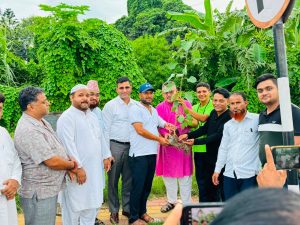
For Hement Raj Kaphale, planting trees is not simply an environmental activity. It is a philosophy of life, a form of service to humanity and a peaceful way of creating change. It is a language through which people, communities, cultures and generations can communicate without violence. Every seedling planted is an expression of hope. Every tree that grows becomes a living reminder that humanity has the ability to create rather than destroy, to heal rather than hurt, and to unite rather than divide.
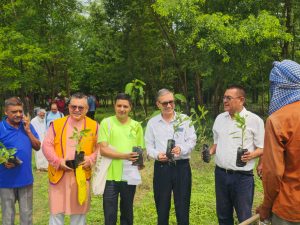
The vision of the Six Nonviolence Trees is deeply connected with the principles of peace, justice, compassion, equality, environmental responsibility and sustainable development. Inspired by the vision and philosophy of Dr. Martin Luther King Jr., whose life demonstrated the extraordinary power of nonviolent action, this movement seeks to connect the moral force of nonviolence with the practical work of protecting nature and building a sustainable future.
The 6 Nonviolence Trees Movement is not simply about planting trees—it is about planting the values of peace, love, justice, equality, respect and nonviolence into our communities and into the future of humanity.
We sincerely acknowledge and appreciate Dr. Leban Seroto from India, whose ideas and support have contributed to the development of this inspiring movement.
Dr. Seroto helped generate the idea of using six trees as living symbols of nonviolence, connecting the act of planting with the deeper values of peace and human dignity. He also kindly sent seeds to Nepal to support the movement and help Hement take this message forward through living trees.
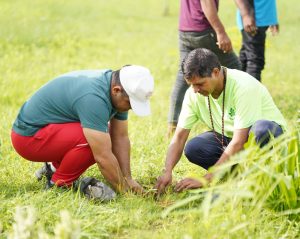 Hement sincerely acknowledge and honor Prof. Dr. Paul Bueno de Mesquita, USA, for his valuable support and guidance in helping us develop the Six Ideals for Nonviolence Trees along the six principles of Kingian Nonviolence. The message is simple but profound: Plant a Tree. Plant Peace. Plant a Value. Plant Nonviolence. Plant a Peaceful Future.
This is not merely a slogan. It is a call to action for schools, communities, governments, organizations, young people, environmentalists, peace advocates and individuals around the world.
In 2020, in Nepal, Hement Raj Kaphale planted a seed of hope—a vision that trees could become ambassadors of peace. At first glance, a tree and the philosophy of nonviolence may appear to belong to two different worlds. One belongs to nature and the other to human society. But when we look deeper, their relationship becomes profound.
A tree does not ask who planted it. It does not ask about religion, caste, language, nationality, political belief or social status. It gives oxygen to everyone. It provides shade to everyone. It protects the soil for everyone. It absorbs carbon for everyone. It provides habitat for birds, insects and animals. It gives fruits, flowers, medicine, beauty and ecological services to generations of people it may never meet.
In this sense, the tree is one of nature’s greatest examples of nonviolence.
A tree gives without demanding. A tree protects without discrimination. A tree stands silently while serving life. A tree may even continue giving benefits to those who cut its branches or harm it. This philosophy is reflected in the powerful statement associated with Hement Raj Kaphale:
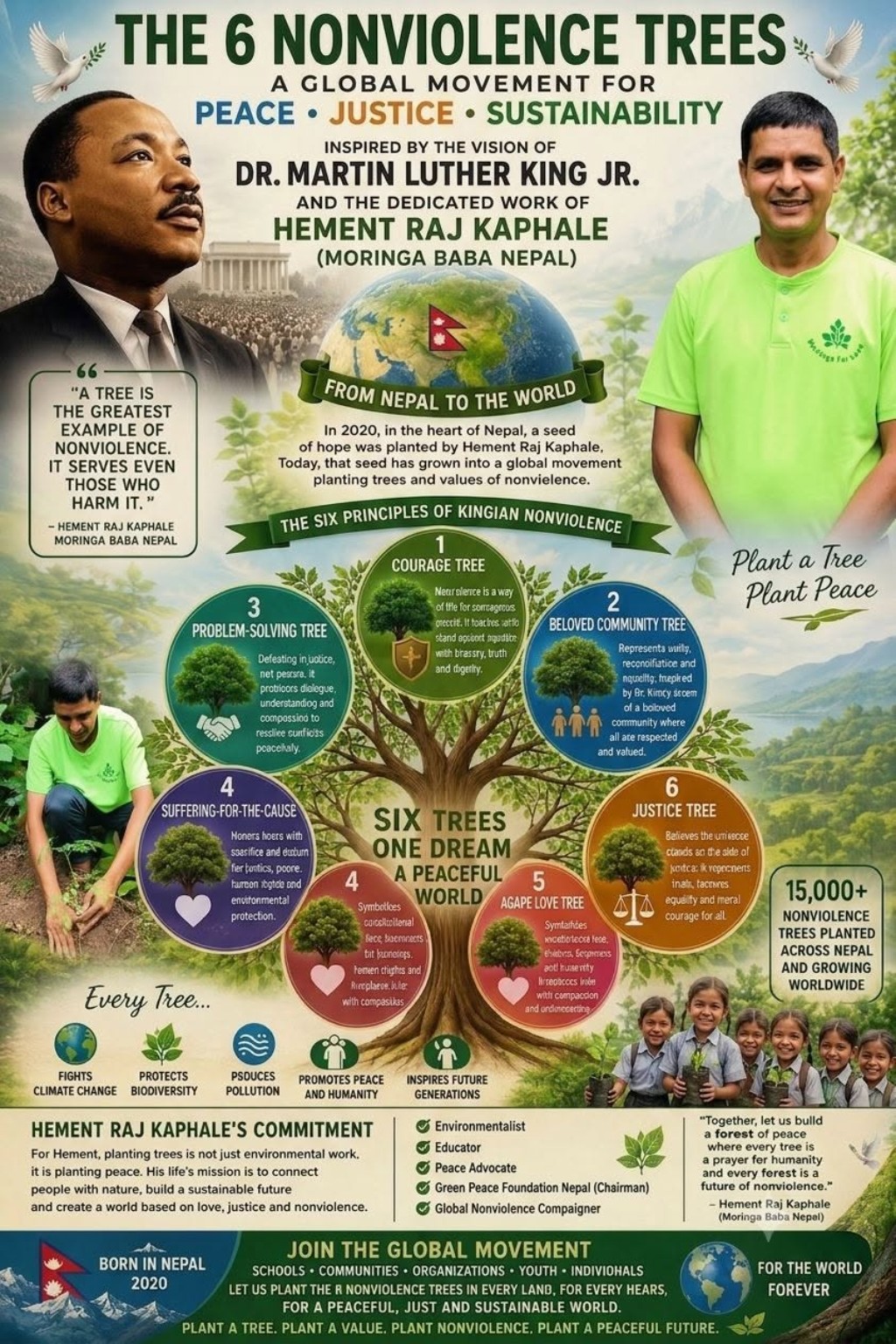
“A tree is the greatest example of nonviolence. It serves even those who harm it.”

This thought forms an important philosophical foundation of the Six Nonviolence Trees Movement. The movement therefore transforms tree planting from an ordinary environmental activity into a moral, educational, social and global movement.
Human civilization has spent thousands of years developing technologies, cities, industries and institutions. Yet one of our greatest challenges remains learning how to live peacefully with one another and with nature.
Violence is not limited to war. Violence can take many forms. It can be violence against human beings, violence against communities, violence caused by discrimination, violence against women and children, violence against animals, violence against forests, violence against rivers and mountains, violence against biodiversity and violence against future generations.
When forests are destroyed irresponsibly, when rivers are polluted, when wildlife habitat disappears and when climate change threatens vulnerable communities, the consequences ultimately affect human life. Therefore, environmental protection is also a form of peacebuilding.
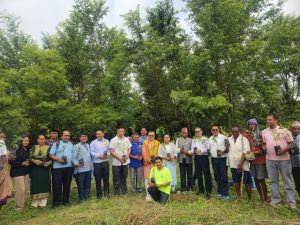
A healthy forest can protect soil, reduce erosion and support biodiversity. Trees can contribute to cooler environments and healthier landscapes. Wetlands can help regulate water. Biodiversity can strengthen ecosystems. Healthy ecosystems can support food and water security. In this way, ecological sustainability and human peace are deeply connected.
The Six Nonviolence Trees Movement seeks to make this connection visible and meaningful.
The movement is inspired by the great lesson of Dr. Martin Luther King Jr.: nonviolence is not weakness; nonviolence is courage, discipline, compassion and moral strength. His life demonstrated that social transformation could be pursued through peaceful action, unity, love and justice.
The Six Nonviolence Trees Movement carries that spirit into the environmental field. If nonviolence can transform societies, can it also transform our relationship with nature? The movement answers with a strong yes.
A tree plantation can become a peaceful gathering. A school garden can become a classroom for compassion. A community forest can become a place where people from different backgrounds work together. A seedling can become a symbol of reconciliation. A forest can become a living monument to peace.
Thus, the Six Nonviolence Trees Movement attempts to build a bridge between Kingian nonviolence and environmental action, creating a new language of peace through trees and nature.
At the heart of this global movement are six symbolic trees representing six important dimensions of nonviolence: the Courage Tree, the Beloved Community Tree, the Problem-Solving Tree, the Suffering-for-the-Cause Tree, the Agape Love Tree and the Justice Tree.
Together, these six trees represent one dream: a peaceful world.
The first is the Courage Tree. Nonviolence does not mean being passive or remaining silent in the face of injustice. True nonviolence requires courage. It takes courage to stand for what is right. It takes courage to protect a forest when it is threatened. It takes courage to speak for people who have no voice. It takes courage to plant trees when others are focused only on short-term benefits. It takes courage to continue working when recognition does not come immediately.
The Courage Tree therefore represents the willingness to act peacefully but firmly. It reminds us that courage does not always mean fighting. Sometimes courage means refusing to hate. Sometimes courage means choosing dialogue. Sometimes courage means continuing to plant when others are destroying.
A seed is tiny, but inside it is the potential of a giant tree. Likewise, one courageous person can inspire thousands. The movement teaches young people: Do not wait for someone else to create change. Plant the first seed yourself.
The second is the Beloved Community Tree. The idea of a beloved community represents a society where people are respected, included, valued and treated with dignity. A tree can bring people together.
Imagine children from different backgrounds planting a tree together. Imagine teachers and students caring for the same garden. Imagine people from different communities working together to restore a forest. Imagine religious communities planting trees together for future generations. The tree becomes common ground. The Beloved Community Tree therefore represents unity, reconciliation, respect and human dignity.
A forest does not consist of only one kind of tree. A healthy ecosystem depends on diversity. Human society is similar. We do not need to become identical to live peacefully. We need to learn to respect our differences while protecting our shared future.
The third is the Problem-Solving Tree. Every society has problems. There are environmental problems, social problems, economic problems, political disagreements and conflicts between individuals and communities.
The question is not whether problems will exist. The question is: How will we solve them?
Violence creates more problems than it solves. Nonviolence encourages dialogue, understanding, cooperation and creative solutions.
Environmental challenges especially require collective problem-solving. Climate change cannot be solved by one person. Deforestation cannot be stopped by one organization. Pollution cannot be eliminated by one city. Biodiversity cannot be protected by one country alone. These challenges require people to work together.
The Problem-Solving Tree symbolizes the transition from confrontation to cooperation. It tells us: Before fighting against each other, let us work together to solve the problem. The fourth is the Suffering-for-the-Cause Tree, representing sacrifice, patience and perseverance. Meaningful change rarely happens overnight.
A person who plants a tree today may not see the full-grown forest tomorrow. A person who protects biodiversity may not immediately see the results. A person who teaches children about environmental responsibility may only see the impact decades later. This requires patience. It requires sacrifice. It requires continuing even when the work is difficult.
A tree planted today may provide shade to a child twenty or thirty years from now. That child may never know who planted it. This is one of the deepest forms of service. The Suffering-for-the-Cause Tree reminds us that great causes demand commitment, patience and perseverance.
The fifth is the Agape Love Tree, representing selfless and unconditional love for humanity and life. This is not simply emotional affection. It is a commitment to the well-being of others.
When someone plants a tree for future generations, that person is expressing love toward people who have not yet been born. When someone protects a forest, they are protecting countless species that cannot speak for themselves. When someone restores a river, they are serving communities downstream. When children plant trees, they are learning that caring for the Earth is an expression of love.
The Agape Love Tree teaches a powerful lesson:
Love should become action.
If we say we love our children, we must protect the planet they will inherit. If we say we love humanity, we must protect clean air, clean water, biodiversity and a stable climate. If we say we love peace, we must create conditions in which peace can survive.
The sixth is the Justice Tree. There can be no lasting peace without justice.
Environmental destruction often affects vulnerable communities first. Poor communities may suffer from polluted water. Farmers may suffer from changing rainfall patterns. Mountain communities may face climate-related risks. Children may inherit environmental problems created by previous generations. Therefore, environmental protection is also an issue of fairness between communities and generations.
The Justice Tree symbolizes equality, fairness, human dignity and responsibility. It reminds us that nature should not be protected only for wealthy societies or future generations in distant countries.
Every person deserves a healthy environment. Every child deserves clean air. Every community deserves clean water. Every generation deserves a liveable planet. Justice means ensuring that environmental benefits and responsibilities are shared fairly.
The six trees are different, but they grow from the same soil. Courage gives us the strength to act. Beloved Community gives us the strength to unite. Problem-solving gives us the wisdom to find solutions. Suffering-for-the-Cause gives us perseverance. Agape Love gives us compassion. Justice gives us fairness.
Together they create a powerful philosophy:
Six Trees. One Dream. A Peaceful World.
This is the heart of the movement.
The objective is not simply to plant six particular trees. The deeper objective is to plant six values in the hearts of people. A tree becomes a symbol. A plantation becomes a classroom. A forest becomes a monument. A seed becomes a message.
The movement carries a powerful geographical message: “From Nepal to the World.”
Nepal is a country of extraordinary ecological and cultural diversity, from the Himalayas to the Terai. It is a land where people have lived closely with forests, rivers, mountains, farms and biodiversity for generations. At the same time, Nepal faces serious environmental challenges, including climate change, deforestation, biodiversity loss, pollution, floods, landslides and increasing pressure on natural resources.
The Six Nonviolence Trees Movement seeks to demonstrate that Nepal can contribute not only to global environmental discussions but also to a global culture of peace.
The message is universal.
A child in Nepal can plant a tree. A student in Africa can plant a tree. A community in Asia can restore a forest. A school in Europe can create a peace garden. A youth organization in America can organize a nonviolence plantation.
Different countries may have different tree species, ecosystems and cultures, but the values remain the same. Peace has no border. Nature has no border. Climate change has no border. Therefore, environmental responsibility must also become global. One of the strongest aspects of this mission is its potential in education.
Schools should not teach environmental protection only through textbooks. Children should experience nature. Let students plant trees. Let them water them. Let them observe their growth. Let them learn about soil. Let them observe birds and insects. Let them understand climate change and biodiversity.
But beyond science, let them learn values.
Ask a child: “Who will benefit from the tree you planted?”
The answer could be: “People I don’t know.”
That is the beginning of selfless service.
The child learns that doing something good does not always require immediate personal benefit. This is how environmental education can become peace education. The Six Nonviolence Trees Movement therefore has enormous potential to become a movement for schools and young people around the world.
Imagine schools establishing Nonviolence Tree Clubs, Peace Gardens, School Forests, Biodiversity Gardens, Moringa Gardens and Climate Action Plantation Programs. Imagine students adopting trees and caring for them throughout the year. Imagine schools celebrating the anniversary of their plantation as a Peace and Nature Day.
Every young person can be given a simple challenge:
Plant one tree. Protect one tree. Inspire one person. If millions of young people accept this challenge, the movement can become truly global.
One of the most beautiful dimensions of tree planting is its relationship with time.
A tree connects generations.
Someone plants it. Another generation protects it. Another generation receives its shade. A future generation may see it as part of the landscape and never know its origin.
This creates an important lesson about responsibility. We are not the owners of the Earth. We are temporary custodians. We inherited the planet from previous generations, and we have a responsibility to pass it forward.
The Six Nonviolence Trees Movement therefore asks every generation:
What kind of planet will you leave behind?
Will you leave conflict or cooperation? Pollution or clean air? Concrete everywhere or living forests? Fear or hope? Hatred or compassion?
The choice begins with small actions.
Sometimes it begins with one seed.
The movement also carries a strong environmental mission. Trees can contribute to carbon absorption, biodiversity conservation, soil protection, erosion reduction, habitat creation, landscape restoration, local cooling and ecological resilience. But the movement goes beyond counting trees.
The goal is not only to plant trees. The goal is to grow a culture that protects trees.
Planting without care is incomplete.
A successful plantation requires a long-term commitment:
Plant → Protect → Nurture → Grow → Educate → Inspire.
A small number of healthy, surviving trees can be more meaningful than thousands of seedlings planted and forgotten.
Therefore, the movement should encourage long-term tree care, community ownership, monitoring and environmental education.
The identity of “Moringa Baba Nepal” adds another important dimension to this mission. Moringa has become an important part of Hement Raj Kaphale’s environmental and community work. Promoting useful and appropriate plants can connect environmental conservation with nutrition, livelihoods, community development and sustainable living.
This reflects a broader philosophy: a tree should not only stand in the landscape; it should improve human life while strengthening nature.
The movement can therefore promote appropriate native and useful tree species according to local ecological conditions, while always respecting the principle of right tree, right place, right purpose and long-term care.
The poster represents the movement as having already contributed to 15,000+ nonviolence trees planted across Nepal and a growing worldwide movement. This achievement should not merely be understood as a number.
Behind every tree is an action.
Behind every plantation is a person.
Behind every person is a story.
Behind every story is hope.
A single tree may appear insignificant when viewed alone. But thousands of trees represent thousands of decisions to choose life over destruction, cooperation over indifference and hope over despair.
The ultimate ambition is much larger:
A nonviolence tree in every school, every community and every country that embraces the movement.
At the center of this mission is Hement Raj Kaphale’s personal commitment. For him, planting trees is not simply environmental work; it is a way of life.
Nature is not merely something to be discussed at conferences. It is something to be touched, planted, protected and nurtured.
His mission connects environmentalism with education, peace advocacy, community participation and service to future generations.
The message is particularly powerful because it translates enormous global challenges—climate change, biodiversity loss, environmental degradation and social division—into actions that ordinary people can take.
One person may not be able to stop global warming alone.
One person may not be able to change international environmental policy alone.
One person may not be able to solve every social conflict alone.
But one person can plant a tree.
One person can protect a forest.
One person can teach a child.
One person can inspire a community.
And millions of such actions can create transformation.
The Six Nonviolence Trees Movement should belong to everyone. It does not need to ask, “What is your religion?” “What is your caste?” “What is your nationality?” or “What is your political identity?”
Instead, it asks:
Do you want peace?
Do you want justice?
Do you want a healthy planet?
Do you want your children to have a better future?
If the answer is yes, there is a place for you in this movement.
A tree can stand in any community. It does not divide people. It connects them.
That is why the movement has the potential to become a universal environmental peace movement.
Imagine a future in which every school has a Nonviolence Tree. Imagine students gathering beneath it every year to renew their commitment to peace. Imagine communities planting trees after conflicts as symbols of reconciliation. Imagine trees being planted in memory of people who lost their lives to violence. Imagine peace forests being established across countries. Imagine children from different nations exchanging photographs of the trees they planted.
Imagine an international network of schools, communities, environmental organizations, peace advocates and youth groups connected by the simple act of planting and protecting trees.
That is the future this movement can help build.
A forest is not created in one day.
Neither is peace.
Both require patience.
Both require protection.
Both require collective responsibility.
Both begin with a seed.
The Six Nonviolence Trees Movement can ultimately become a personal pledge for every participant:
I will have the courage to protect what is right.
I will help build a beloved community.
I will solve problems through dialogue and cooperation.
I will remain committed even when the journey is difficult.
I will practice compassion and selfless love.
I will stand for justice and equality.
And above all:
I will protect nature because protecting nature means protecting life.
The most powerful message of this movement may be its simplicity.
We often believe that changing the world requires enormous resources. But history repeatedly demonstrates that great movements can begin with simple ideas.
One person.
One seed.
One tree.
One community.
One dream.
The Six Nonviolence Trees Movement began with an idea in Nepal. Today, that idea carries a larger ambition: to connect environmental action with the universal human desire for peace, justice and sustainability.
The movement asks us to rethink what a tree represents.
A tree is not merely wood.
It is life.
It is shelter.
It is food.
It is biodiversity.
It is climate protection.
It is memory.
It is hope.
And in the philosophy of this movement, it is also nonviolence.
The world does not need another generation that only talks about peace.
It needs a generation that plants peace.
It does not need only environmental speeches.
It needs environmental action.
It does not need only promises for future generations.
It needs people willing to work for those generations today.
The Six Nonviolence Trees Movement brings these ideas together: Courage. Community. Problem-solving. Sacrifice. Love. Justice.
Six trees.
Six values.
One dream.
A peaceful world.
From Nepal to the world, the message of Hement Raj Kaphale—“Moringa Baba Nepal”—is ultimately a message of hope.
It tells us that environmentalism does not have to be separated from humanity. Peace does not have to be separated from nature. Justice does not have to be separated from sustainability. Activism does not have to begin with confrontation.
It can begin with a seed.
It can begin with a child holding a sapling.
It can begin with a community digging a small hole in the soil.
It can begin with two people choosing cooperation instead of conflict.
It can begin with one person deciding that the future deserves better.
That person can be anyone.
It can be you.
So let us plant.
Let us protect.
Let us educate.
Let us unite.
Let us forgive.
Let us practice justice.
Let us nurture nature.
Let us inspire children.
Let us create forests of peace across the world.
Because when we plant a tree, we are not only putting a seed into the soil.
We are planting a promise.
A promise to the Earth.
A promise to humanity.
A promise to children.
A promise to future generations.
A promise that life is more powerful than destruction.
A promise that love can be stronger than hatred.
A promise that justice can overcome discrimination.
A promise that communities can choose cooperation.
A promise that humanity can live in harmony with nature.
And above all, a promise that peace is something we can cultivate.
SIX TREES. ONE DREAM. ONE EARTH. ONE HUMANITY.
PLANT A TREE. PLANT A VALUE. PLANT NONVIOLENCE. PLANT PEACE.
FROM NEPAL TO THE WORLD — FOR THE WORLD, FOREVER.


