










 |
|

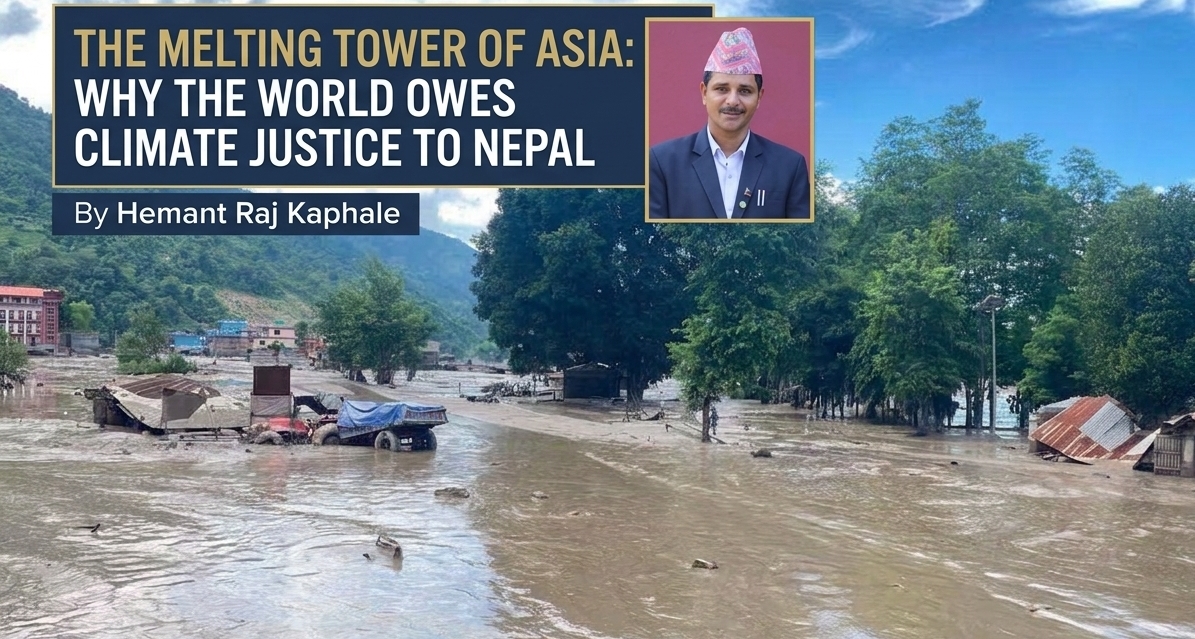
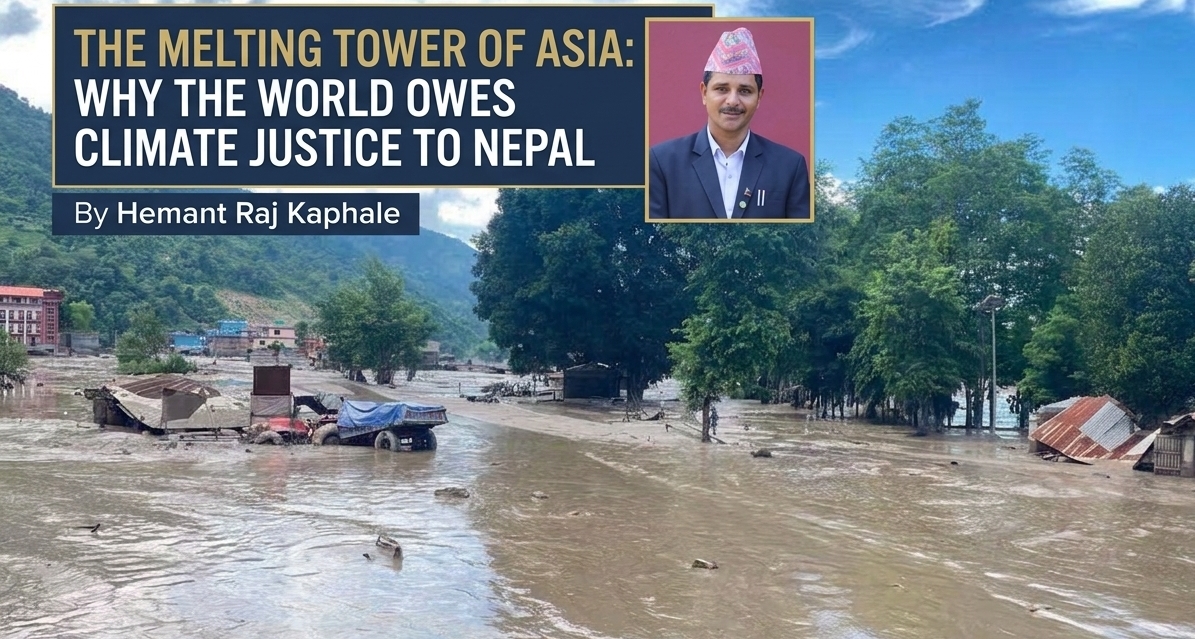
Hement Raj Kaphale / On 26 August 2026, Nepal suffered one of the most devastating disasters in its recent history when a catastrophic flood and debris surge struck Rasuwa and the Bhote Koshi corridor, leaving a trail of unimaginable human and material destruction. More than 1,200 people have been reported dead and around 4,200 remain missing, while approximately 20,000 homes have been destroyed or rendered uninhabitable, including about 7,500 completely destroyed structures. Roads, bridges, hydropower infrastructure, businesses, hotels, schools livelihoods have been swept away or buried beneath mud, rock, water, debris. Around 900 people associated with hydropower projects remain unreachable many believed to have been inside tunnels when the disaster struck. Behind these numbers are mothers who have lost children, children who have lost parents, families searching desperately for loved ones, and entire communities struggling to comprehend how their lives disappeared within hours. Rasuwa is not simply a disaster statistic; it is a profound human tragedy and an urgent warning to the world.
The tragedy of Rasuwa must be understood within the larger crisis unfolding across the Hindu Kush Himalaya. The Himalayas are not merely Nepal’s identity, landscape, or source of tourism they are among Asia’s most vital natural water towers, supporting the lives, agriculture, energy systems, and economies of nearly two billion people downstream. Yet the cryosphere is changing at an alarming speed. ICIMOD reports that glaciers across the Hindu Kush Himalaya lost ice 65% faster during 2011–2020 than in the previous decade, while new assessments show that the rate of ice loss has doubled since 2000. As glaciers retreat, mountain slopes, ice, rock, and permafrost become increasingly unstable, creating dangerous conditions for cascading landslides, avalanches, glacial lake outburst floods, and debris flows. What is happening in the mountains is therefore not a distant environmental story it is a direct threat to human survival, water security, and regional stability.
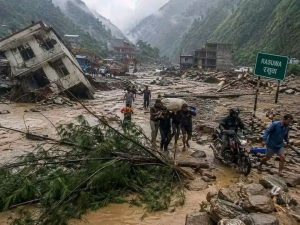
Nepal stands on the frontline of this crisis despite contributing only a tiny fraction of global greenhouse-gas emissions. Nepal’s first Nationally Determined Contribution places its share of global emissions at roughly 0.027 percent. Yet Nepali communities are forced to confront melting glaciers, shifting rainfall patterns, severe floods, landslides, droughts, ecosystem disruption, and increasingly costly climate-related disasters. This is the painful injustice at the heart of the climate crisis: those who have contributed least to global warming are forced to bear its most devastating consequences. A farmer losing fertile land, a family losing its home, a child losing a parent, or a village disappearing beneath floodwater cannot be measured merely in economic figures. These are losses of dignity, security, culture, memory, and future opportunity.
The grandeur of the Asian water tower is defined by the world’s fourteen highest peaks the famous eight thousanders Mount Everest (8,848.86m), K2 (8,611m), Kangchenjunga (8,586m), Lhotse (8,516m), Makalu (8,485m), Cho Oyu (8,188m), Dhaulagiri I (8,167m), Manaslu (8,163m), Nanga Parbat (8,125m), Annapurna I (8,091m), Gasherbrum I (8,080m), Broad Peak (8,051m), Gasherbrum II (8,034m), and Shishapangma (8,027m). Eight of these giants reside in Nepal, feeding vast and ancient glacial networks such as the Khumbu Glacier (the highest glacier in the world), the Ngozumpa Glacier (the longest in the Himalayas), the Langtang Glacier, Imja Glacier, Barun Glacier, and the Annapurna Glacier System. Yet today, these iconic ice reserves are retreating at alarming rates.
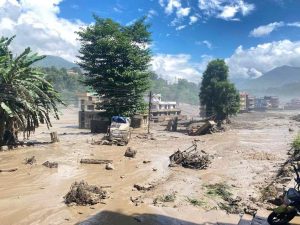
Nepal’s history contains painful warnings of this cryospheric breakdown. The 1985 Dig Tsho glacial lake outburst flood destroyed bridges, trails, cultivated land, and the nearly completed Namche hydropower project. The long-standing threat surrounding Tsho Rolpa demonstrated how an expanding glacial lake can jeopardize entire downstream valleys and critical infrastructure. In 2024, a devastating flood at Thame destroyed homes, hotels, a school, and a health facility, displacing families and further highlighting the vulnerability of Himalayan communities to rapidly changing cryospheric conditions. These events are not isolated tragedies they are chapters in a larger story of a rapidly changing mountain environment. Scientific uncertainty regarding the exact sequence of events behind any single disaster must never become an excuse for inaction.
This is why Loss and Damage support must become a matter of justice, not charity. Nepal cannot repeatedly rebuild roads, bridges, homes, schools and hydropower facilities with limited domestic resources while confronting climate-driven risks shaped overwhelmingly by global emissions. Nepal urgently requires meaningful access to climate finance for adaptation, disaster preparedness, early warning systems, glacier and glacial lake monitoing, resilient infrastructure ecosystem restoration. Wealthier nations and major historical emitters must accelerate their transition away from fossil fuels and provide reliable, sustained support to vulnerable nations. International climate commitments must move beyond declarations and conference halls to become visible in the lives of mountain communities in safer villages, protected watersheds, and dignified recovery.
Nepal will not wait passively for the world to act. We will continue to protect our forests, restore watersheds, conserve rivers, strengthen local communities, improve early-warning systems, and build climate-resilient infrastructure. However, local action cannot compensate for global emissions. A village in Nepal cannot absorb the carbon released by the world’s largest industrial economies. The Himalayas have sustained life for millennia, shaping civilizations and connecting communities across borders. Rebuilding after Rasuwa must mean building safer, stronger, and more resilient communities while safeguarding the natural heritage of the mountains. Nepal is not asking for sympathy or empty promises. We are asking for climate justice, partnership, and immediate global action. The message from the roof of the world is simple and urgent: Save the Himalayas. Protect the Glaciers. Defend the Water. Deliver Climate Justice for Nepal.
(Writer is Environmentalist Climate Advocate and Nepal planting director of 8 billion trees
https://8billiontrees.com/planting-projects/nepal/)


